

leopard prints and keystone species
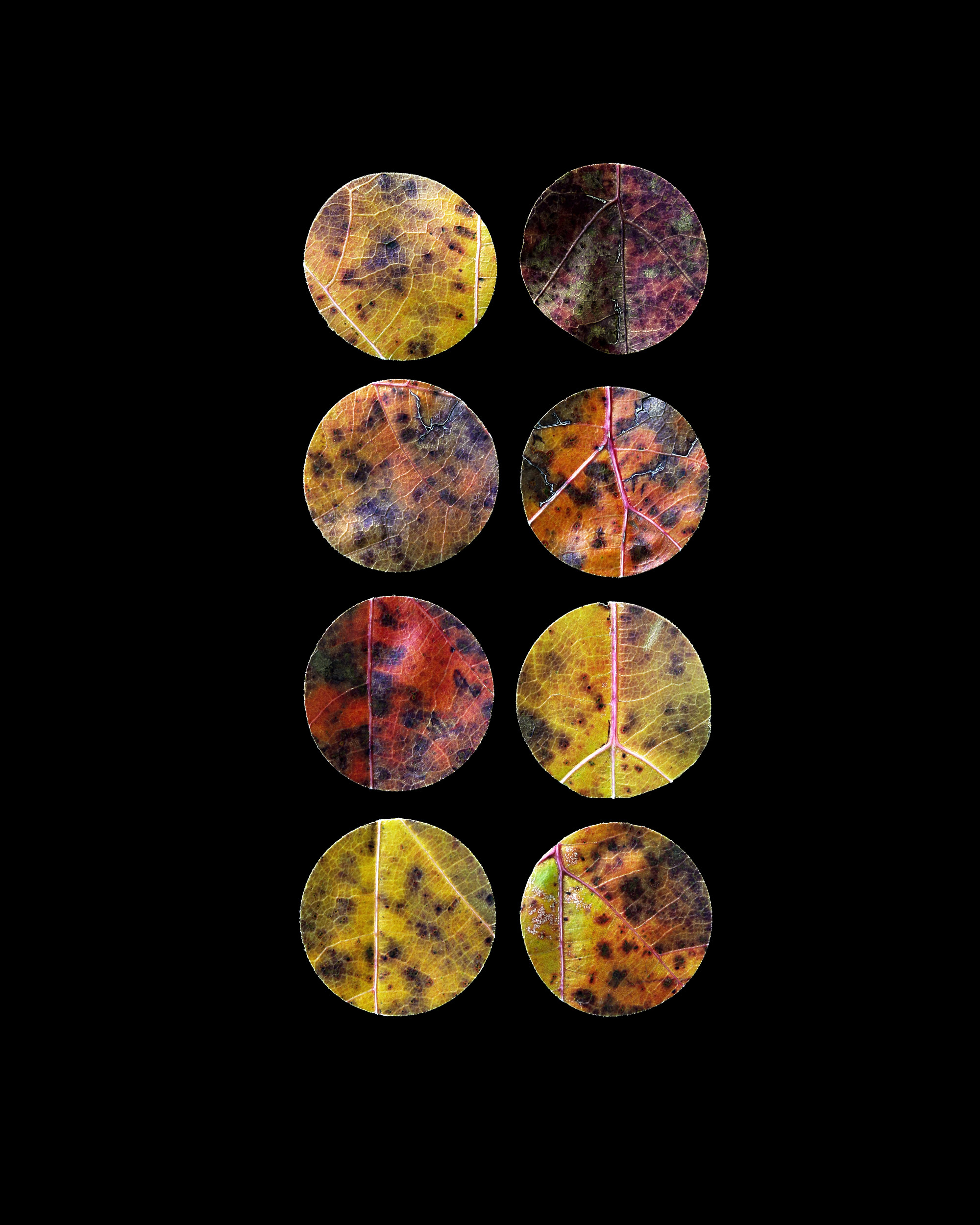
I sort of ignored the oaks this year. So many of our other plants––especially the sumacs––turned such distinctive and unusual colors this fall that I didn’t even take notice of the oaks. But the leopard print effect on the leaves of this red oak grabbed my attention yesterday while I was out walking.
In the North, the oaks are considered our keystone tree. Are you familiar with keystone trees? A keystone tree is a species that has an outsized, disproportionate impact on its environment relative to its abundance. Oaks (Quercus) are widely considered the pinnacle of wildlife value because they hold the entire food web together by supporting hundreds of species of caterpillars, birds, and mammals. If a keystone tree is removed, the ecosystem radically changes or collapses.
northern red oak leaves in autumn (Quercus rubra)
going all in
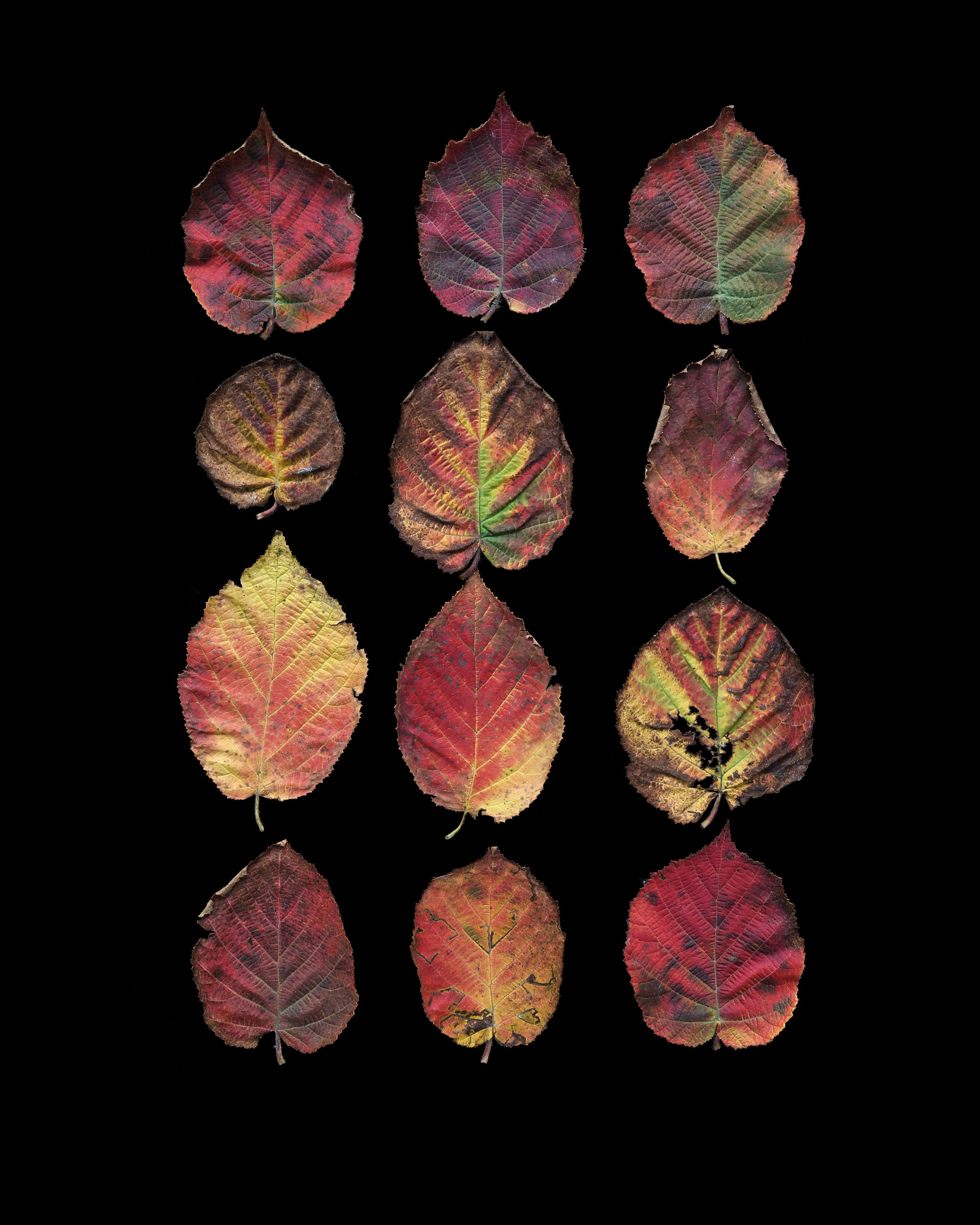
Any of you who check in here regularly probably know by now that when we Hoffmans are piqued by a new interest we go ALL IN. We don’t just casually learn a few facts nor spend an hour down an internet rabbit hole to satisfy our curiosity and then move on. Ohhh, no. We can become singular in our attention, and our devotion, and maybe even borderline obsessed. Right now, Steve is in that uniquely Hoffman place with hazelnuts. He is under assignment to write an article on them, due next week, which triggered an entire autumn affair. So now we buy hazelnut oil, hazelnut flour, hazelnut cookies, hazelnut granola and trail mixes, any and all chocolate bars with hazelnuts, and of course, the nuts themselves. Steve has ordered books from Europe, visited hazelnut farms, harvested with the U of M researchers, and walked trails with experts. He probably has enough material to write a book on hazelnuts. But instead he has only a 1200 word article to work within. But that is how we roll at our house. These are hazelnut leaves from the U of M’s hazelnut research center. Hazelnuts are in the birch family, but their fall leaves are so much more colorful than our native birches. Who knew? Steve probably did.
hazel tree (or hazelnut bush) autumn leaves
-
I have a wonderful and delicious recipe for a German hazelnut torte, it is made with ground hazelnuts and iced with mocha whip whipped cream. My mouth is watering just thinking about it.
reply -
All day I was thinking about this photo of “The Community of 12.” And I, like you Mary Ju, became “obsessed.” Here’s the result….
COMMUNITY OF 12
Hazelnut leaves—
Community of differences.Bold. Beautiful. Brave.
Cute. Curious. Coy.
Fun. Furious. Frail.
Shrewd. Sensible. Strong.Born of twisting trunks
That dance like ladies at a ball,
Clothed in bonnets and helmets
And full bearded attire—
The secret to all knowledge.
Pollinated in winter
On wind and wings.But it is the tone that matters most—
The tone of the filber.
Or is it the Nutella
That fills us with desire?reply -
Wow. Mary Jo, I had to catch my breath while reading your comment. You see me, and are correct. Every day, I look forward to seeing the photo you post and I find it incredibly inspiring—each one a work of art. One day you posted later than usual and I actually searched online to make sure there wasn’t some announcement of some sort—that you had ceased posting. That’s when I discovered your 2024 house fire. I can relate, and the poem for today will remind us both of the complexity of fire. A “book of some sort”?! What a fun idea!…and how amazingly generous of you. So let’s see, Your photos have inspired me to return to writing poetry. When something defies comment, I always go to that mode of expression. While I don’t yet have my sea legs, for sure, I’ll “keep em coming!”
reply
sparrow grass
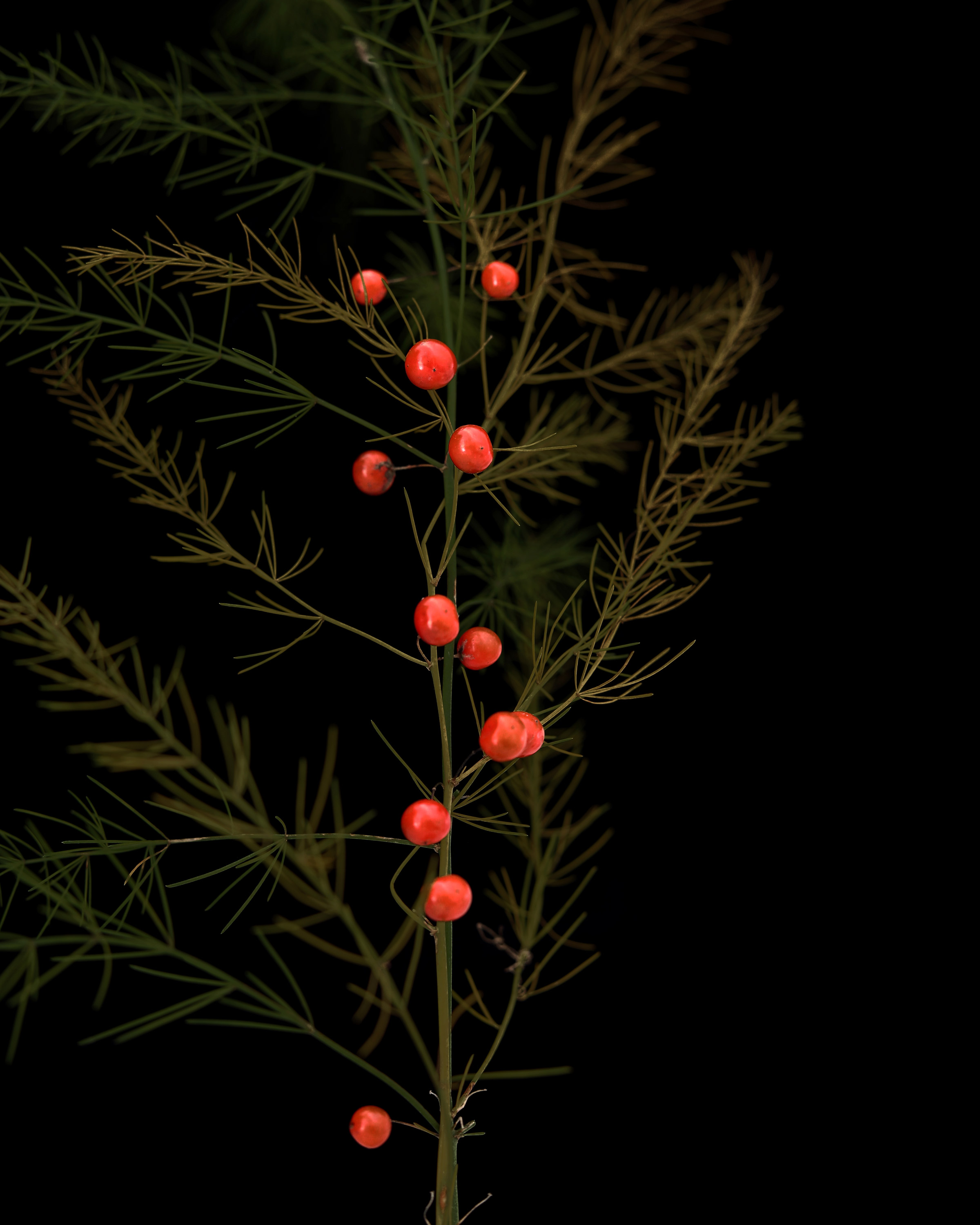
I love happening up a patch of feral asparagus in the fall with its golden ferny needle-like leaves (cladodes) and brilliant orange berries. Did you know that asparagus is sometimes called “sparrow grass” in England? The English word asparagus originally derives from Medieval Latin sparagus. I like eating asparagus; I don’t love it. But I do love seeing it along my trails in October.
Asparagus (Asparagus officinalis)
-
I am moved by the photo to understand the history of this Feral Asparagus and how it might say something about my own life.
FERAL
Beside the path in an unlikely place
You stand—
Uncultivated. Untethered.
Free.
You have escaped the human system
Of control—
Forced. Ordered.
Imprisoned.
Here your needle-like leaves
Flutter—
Like a sparrow in the grass.
Wild.
And your orange round berries
Glisten—
Proud bobbles on display.
Sunlit. Playful.I was where you were.
I am where you are now.reply -
Those berries almost jump off the screen! And the leaves fade into the background, almost an afterthought.
Isn’t etymology fascinating? Some Englishman misheard the word spargus as sparrow grass, and thus a new common name for this plant was born. If you’re a word lover, the podcast Words Unravelled is quite fun!reply
late bloomers
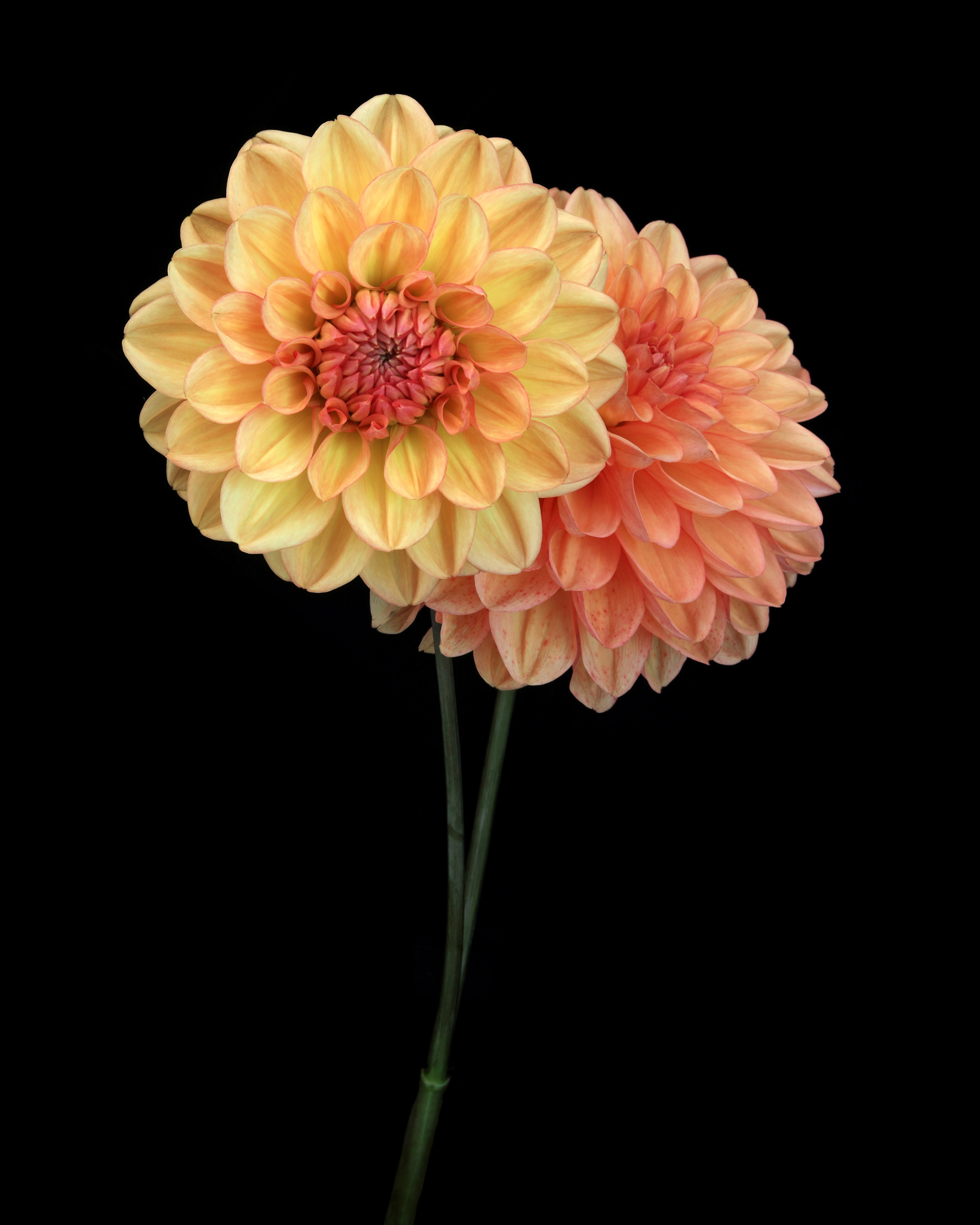
Do you feel like you are being stared at when you look at this image? I do.
I had no idea dahlias were so hardy––continuing to bloom into late October. These surely must mark be the end of our season. Here a few interesting facts about dahlias:
Dahlias are native to Mexico and Central America. Dahlia relatives include the sunflower, daisy, chrysanthemum, and zinnia. There are 49 species of dahlia, with flowers in almost every hue (except blue), with hybrids commonly grown as garden plants. Dahlias were known only to the Aztecs and other southern North American peoples until the Spanish conquest, after which the plants were brought to Europe.
last dahlias of the Twin Cities season
-
TWO
Twins.
Salt and pepper.
Husband and wife.
Peanut butter and jelly.
Animals walking into Noah’s ark.
Roads that diverged into a yellow wood.Inevitably we leave one another,
Or stand in front of,
Depend upon,
Hide behind,
Augment,
Or join.We are never
fully equal,
At least not
at the same time.But who can discern
Which is the better?
Or more beautiful?
Or more resilient?Or
Just how much
We need each other?reply -
MOTHER AND DAUGHTER
I look at the world through my own eyes,
But behind every thought and action
I feel the pulse of your heartbeat.reply -
Mary Jo Hoffman and Carla Park – a dynamic duo. The beauty of image and word in tandem! It sounds so simple, however, is anything but.
reply
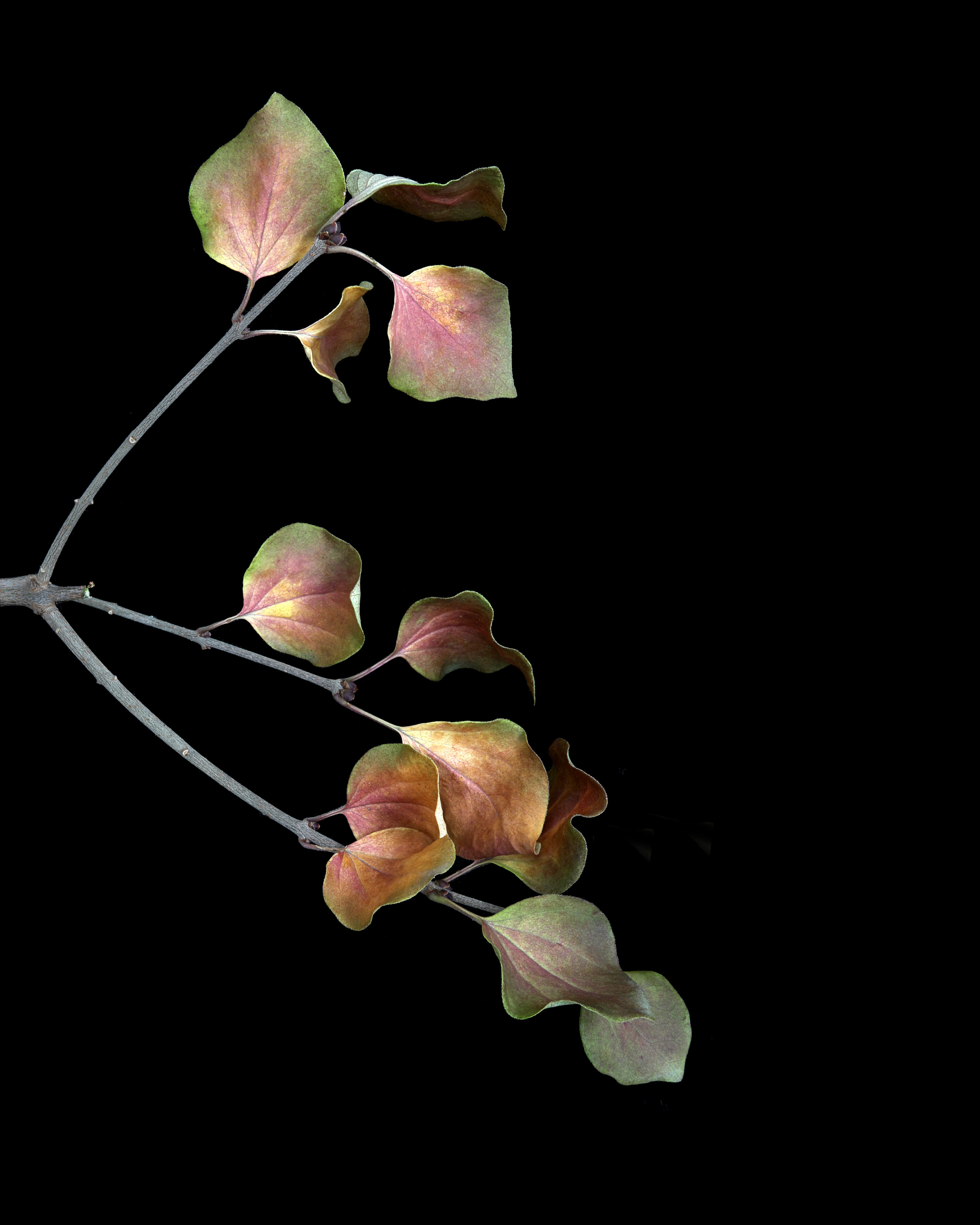
even the lilacs go in on the action
Even the lilacs joined the party this fall. It was one of the prettiest leaf displays I can ever remember.
And now it’s raining. Badly needed, but sadly putting and end to the leafy festivities. What a show it was!
lilac leaves in autumn (Syringa vulgaris)
-
In my journal, I wrote a poem to accompany this photo as I sip my coffee:
Top leaf tips into darkness,
Branch hanging in space,
Community of leaves, at different rates
Saying good-bye.
Joan, Raymond’s wife
Died today.
One less leaf.
The others waiting.
Living. Not living.
Life.reply -
Your art is so beautiful. Incredible.
reply

I learned about keystones about 100 years ago in grade school and how they kept bridges up, so it makes perfect sense about keeping the environment from collapsing
When I saw this photograph of the Oak leaves and the 8 circles, it made me think of the many keystones and keystone moments in my life – two of which are captured in this poem.
KEYSTONES
“Cut it down!”
The chubby man with the orange vest grins
As he stands beside his Frankenstein machine,
With its mouth extended into the sky, biting the wind.
“Why?” I yell back against the noise
Of his insistent gaze.
“I’m in the neighborhood and will give you a deal.”
“What kind of deal is that?!”
I stand with fist raised against the thought.
“This keystone oak has stood for a hundred years,
With micorrhizal network communing at base,
Tree acting as mother to all nearby.
Keep your deal and let this community rest
And nurture all that is beneath its branch.”
***
“If you’ve seen one church, you’ve seen them all,”
The man with Texan hat announces with stupid grin
While viewing the Sistine chapel ceiling,
Speaking too loudly from his too small frame.
“Move out of the way!” I yell silently.
“You take too much space.
As you dismantle the world.”
But the better response comes from the woman at the edge
Blind she sits while friend whispers close.
Suddenly a smile spreads across her face.
She sees without seeing—the grand ceiling—
God and Adam reaching out, touching, not touching.
The scene drowns out all noise of dissent.
It is the birth of the world!
***
In every arch, there is a keystone
Without which, the arch falls.
It comes as an oak,
A friend, work of art, a partner,
A thought, an action, a belief.
Without it, all crumbles.
With it comes the birth of the world.