

never before
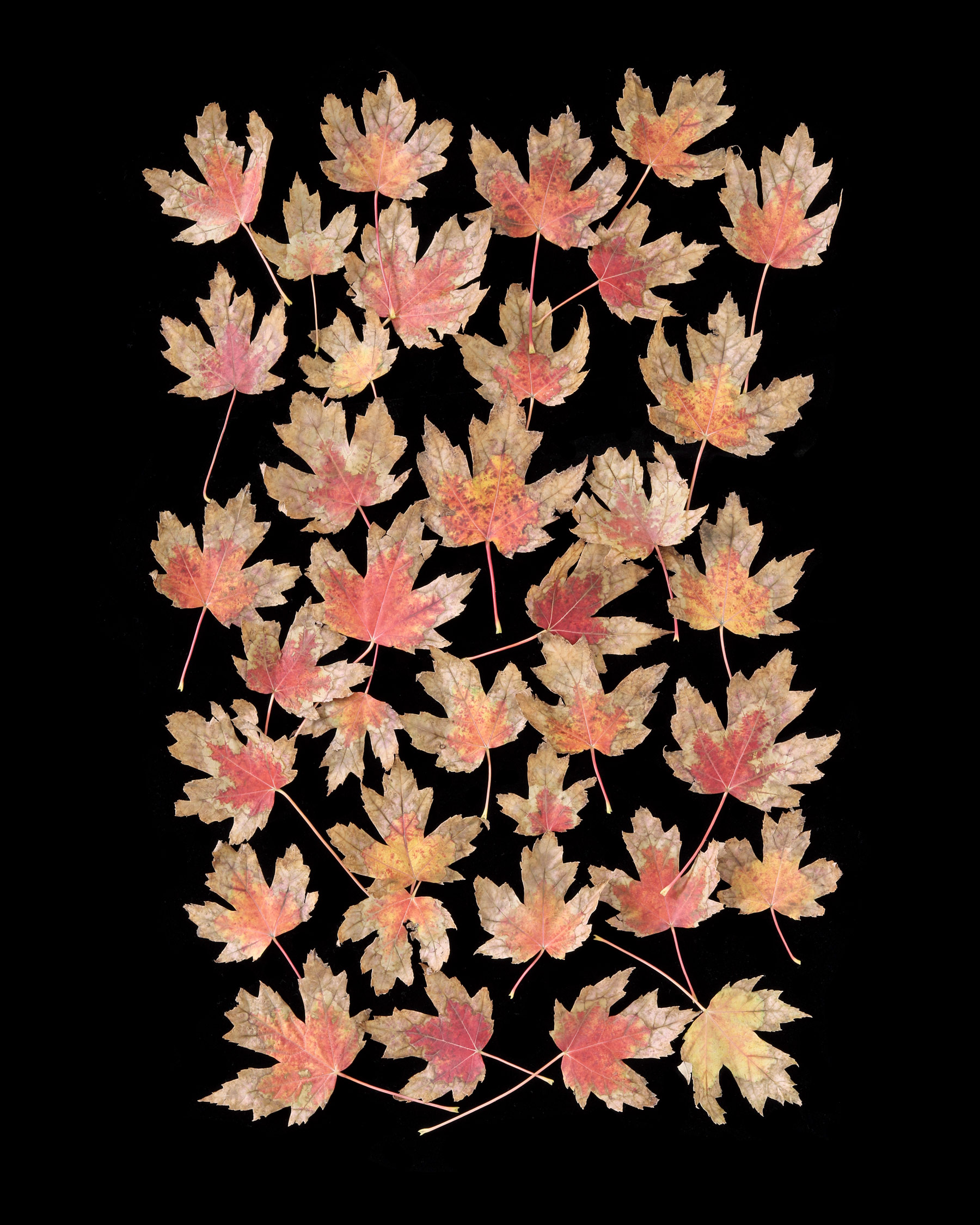
Steve and I collected these leaves outside our favorite Twin Cities fish market, Coastal Seafoods. We are making a seafood chowder for dinner tonight. I’ve never seen maple leaves do this before and had to stop and pick up an armful while Steve loaded the car. My guess is either that our late summer drought dried the delicate perimeter of these leaves while the center, closer to the stem, remained healthy; or that we had a touch of near-frost recently that had a similar effect. In any case, I’m enchanted by these little leaves within leaves. Now off to saute some vegetables.
unusual autumn maple leaves
14 years of professional noticing
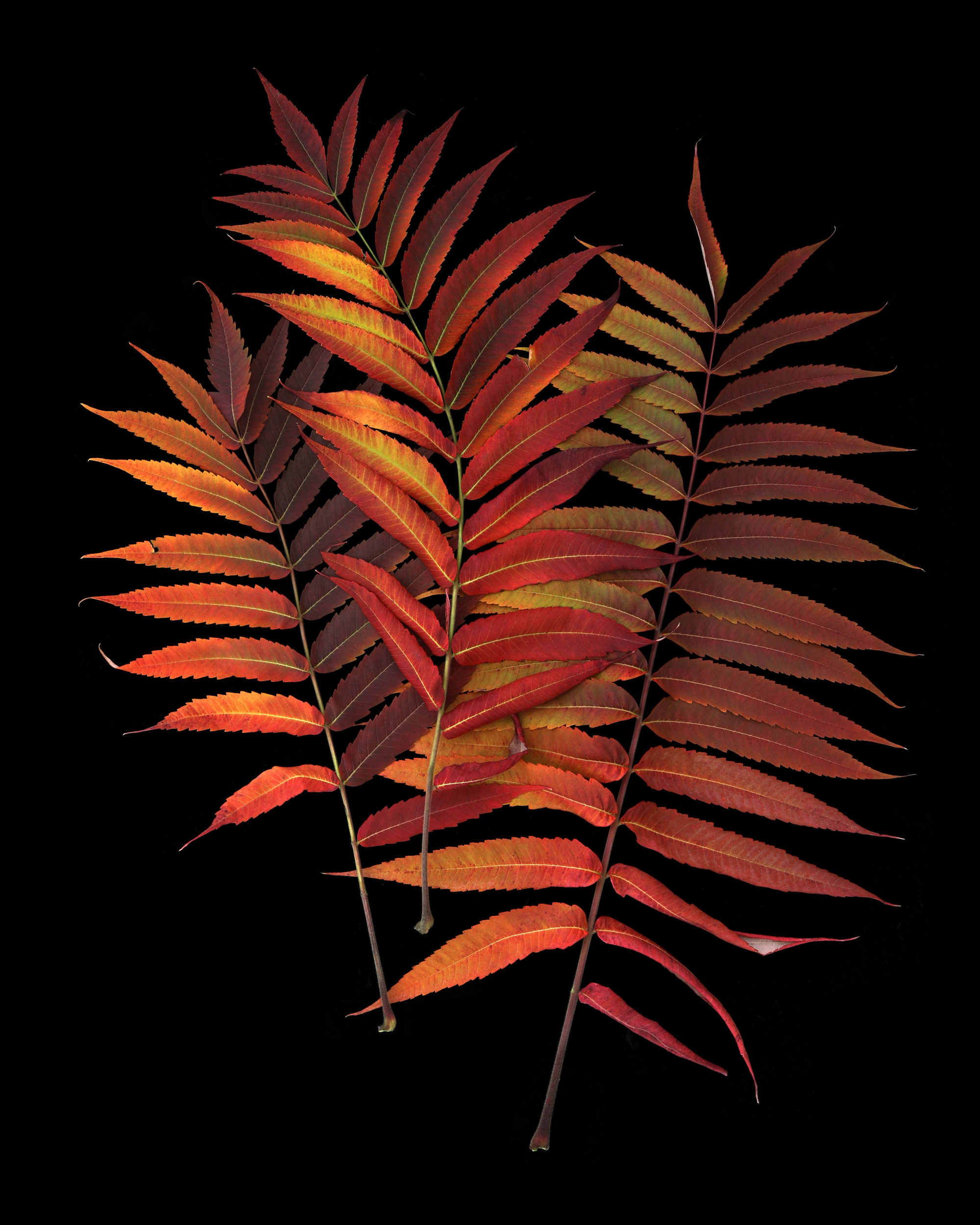
Since I started STILL on January 1st, 2012––14½ years ago––I have never seen our staghorn sumac turn such inviting and varied colors. I wish I knew what the magic formula of rain, temperature, and daylight that produced this stunning display this year. All these earthy secondary and tertiary color combinations in natural–– and yet somehow unexpected––gradients has my head whiplashing from one side of the other to the other on every errand. I have been gathering sumac every day for the past week or so, but I haven’t wanted to gorge you on sumacs. So most of the leaves are drying, and will make their debuts this winter when we all start to get a little tired of brown and gray. (p.s. don’t worry, you will see a few more in the coming days too :-)
staghorn sumac (Rhus typhina)
-
The sumac posts have all been splendid. My fave so far is the circle! Keep ‘um coming :)
reply
can’t unsee it
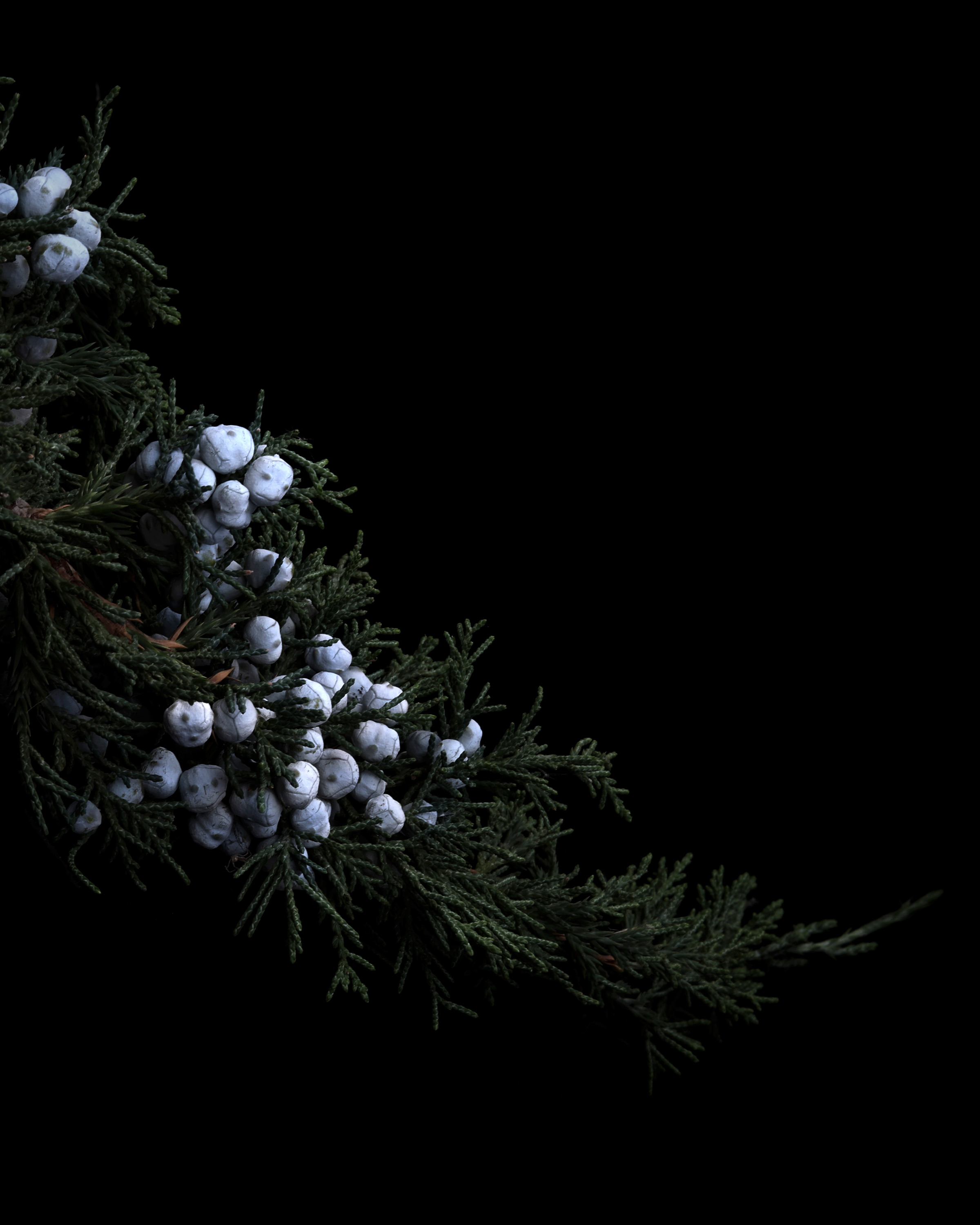
As I edited this photo I discovered that almost every one of these juniper berries has a little alien face on it. Now I can’t unsee it, and neither can you. Sorry, but I like the photo, so you are stuck with alien juniper faces stuck somewhere in your brains. There are worse things . . .
Eastern red cedar, aka eastern juniper (Juniperus virginiana)
noticeably shorter days
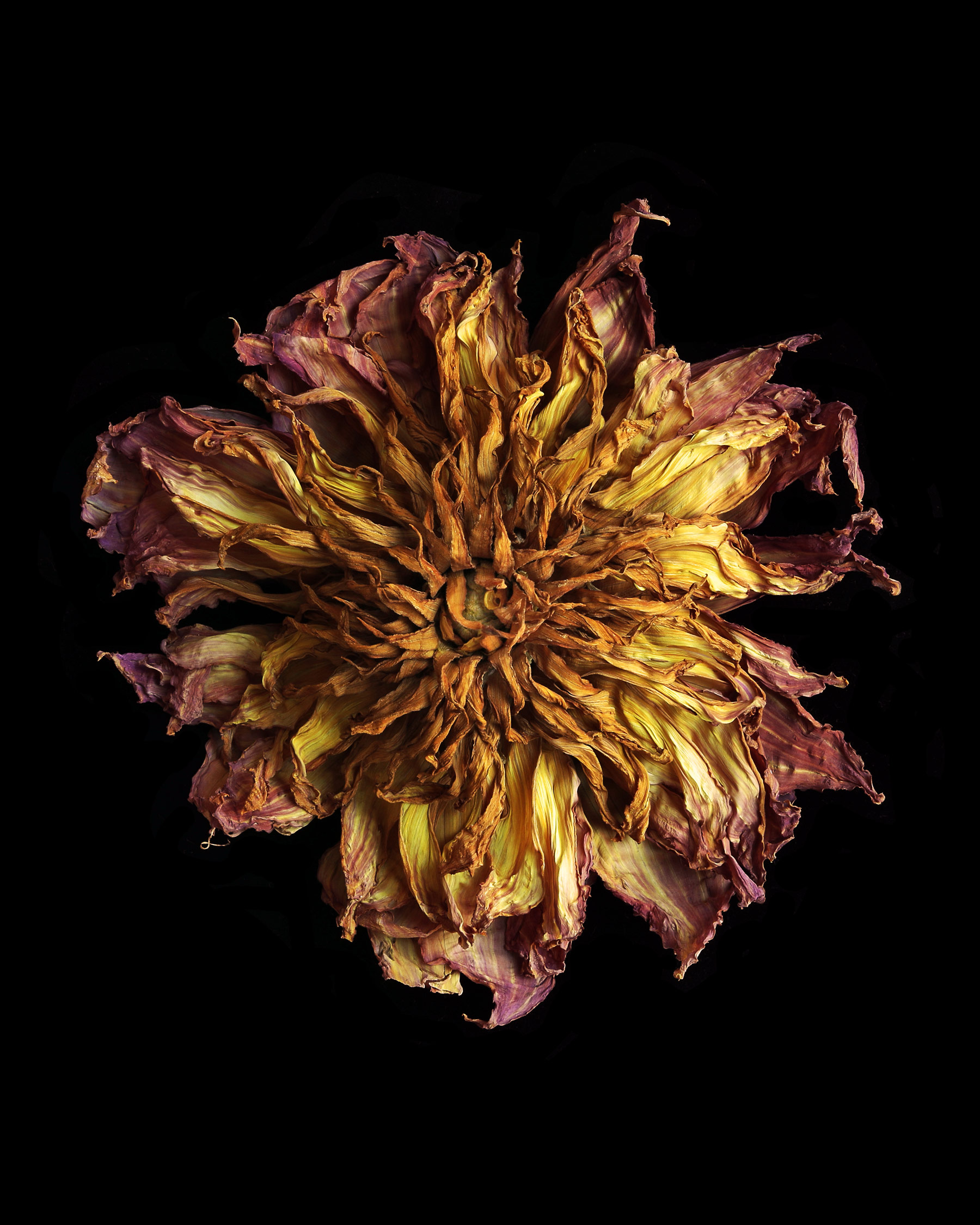
Can you feel the days getting shorter? We are only ten days from daylight savings. We have less than 11 hours of daylight now in Minneapolis. In two months from today, on the winter solstice, we will have exactly three hours less daylight than today. Wowza, that feels fast to me for some reason. Anyway, this dahlia, to me, embodies the sun. I think I will put it on my bookshelf as a talisman of spring’s returning warmth.
I put this dahlia in the dehydrator. It was one of those plate sized flowers. Dried it is the size of my palm.
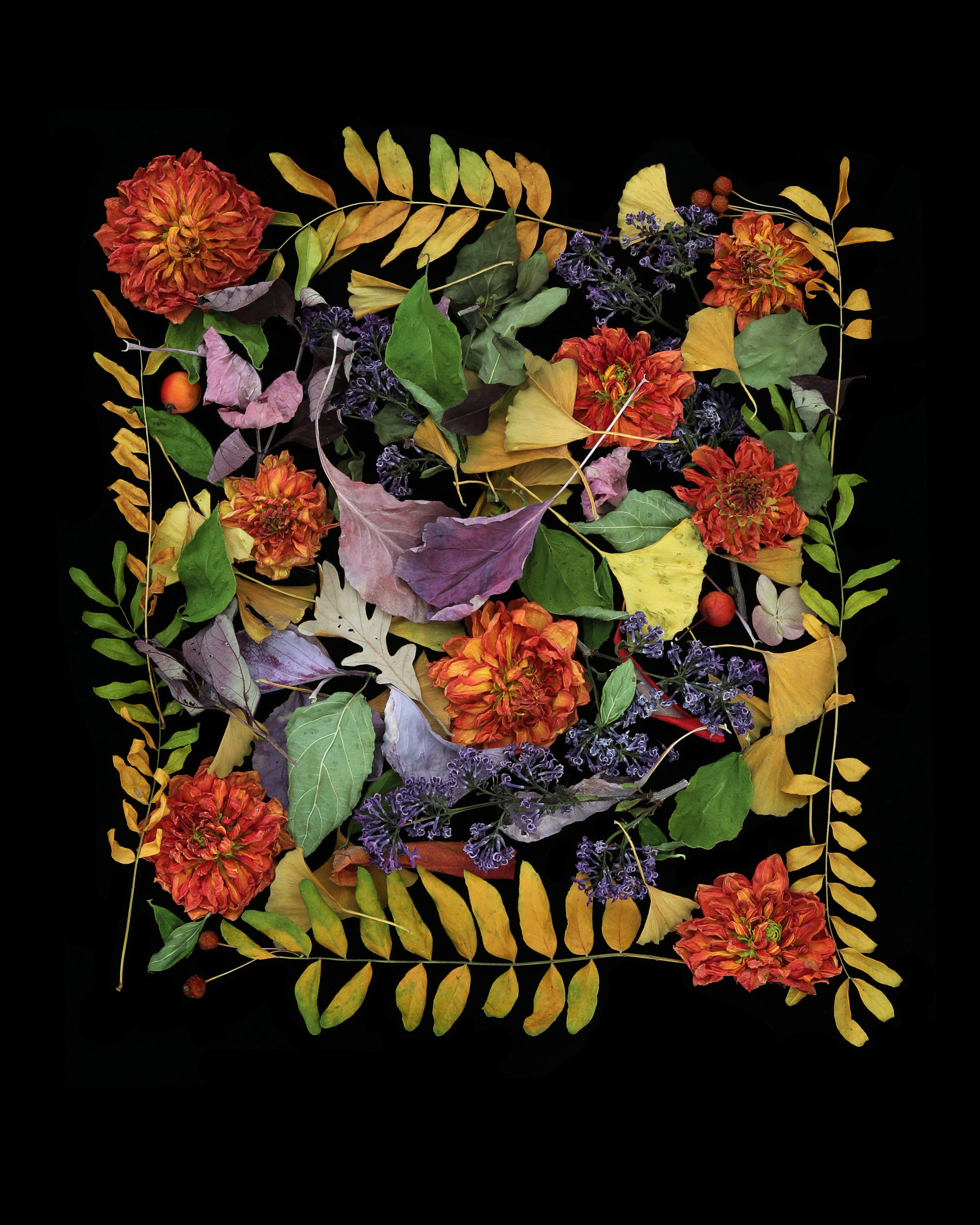
my dehydrator tray
I am putting as much as I can, as fast I can, into our dehydrator at the moment. It’s jawd-roppingly beautiful our there right now, and I am trying to capture as much as I can so I have materials to play with this winter. It’s the STILL equivalent of “money in the bank.” This was my finished (dried) tray from today. The colors caught my attention as I carried the tray upstairs from the banned-to-the-basement dehydrator, so I slid the whole things right onto my black background and shot it as is.
For the curious, this trayful holds: orange dahlias, fall lilac flowers and leaves, ginkgo leaves, Meyer lemon tree leaves, cabbage leaves, honey locust leaves, one hydrangea floret, one oak leaf, two crabapples, a couple stray sumac leaves, and some dried dogwood leaves.
collection of dried flora in mid-October in Minnesota

How delightful! I’ve never seen anything like it. Great find, for sure.