

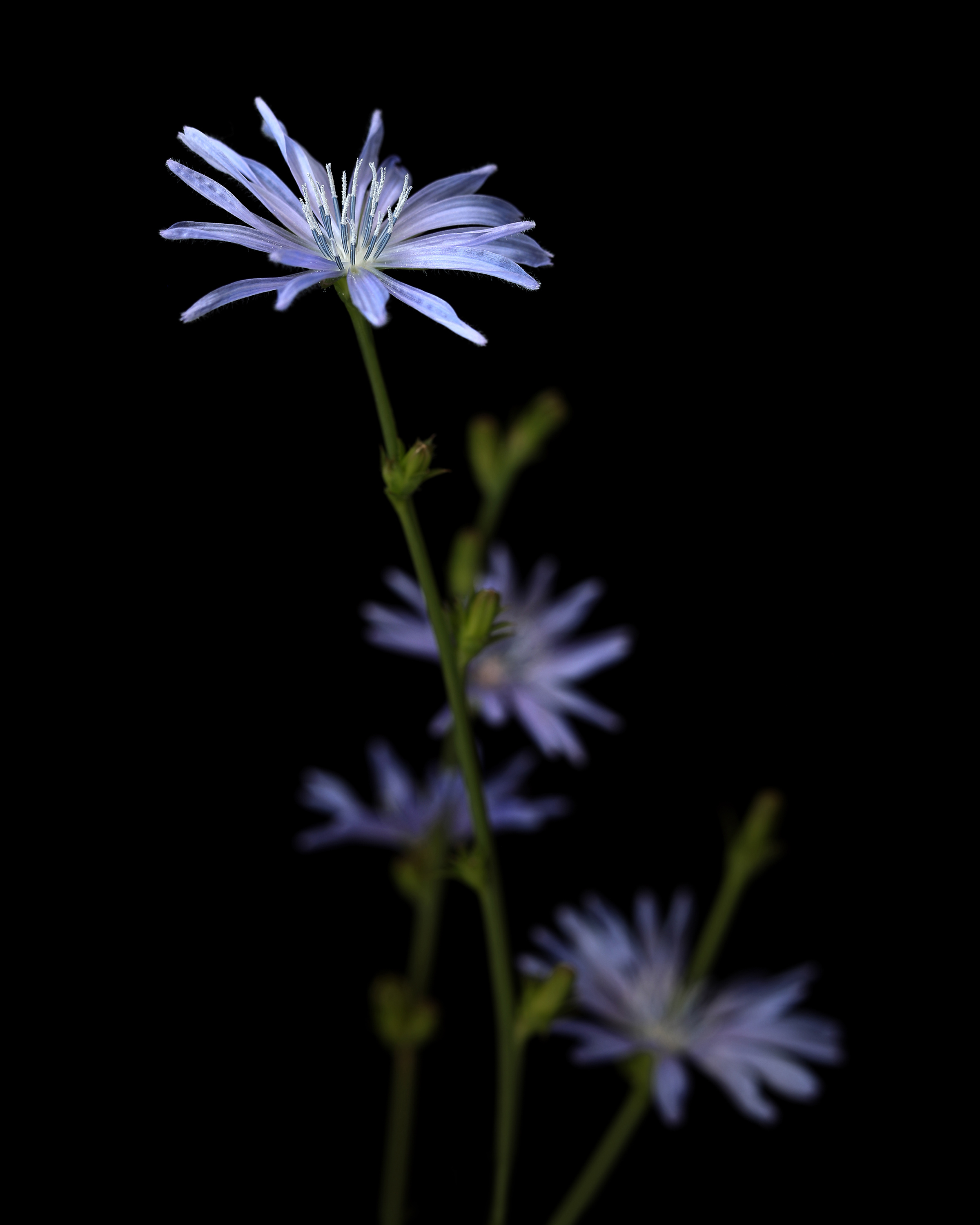
So similar I can’t tell them apart
When I picked these periwinkle pretties, I thought I was gathering chicory (non-native but tolerated). But my trusted MN Wildflowers source says it might be Showy Blue Lettuce (native) instead. It says the two plants are VERY hard to tell apart. And I have to agree. Even with a sample in my hand and multipole descriptions on the internet, I am not sure. Any experts out there?
chicory (Cichorium intybus) or showy blue lettuce (Mulgedium pulchellum) ?
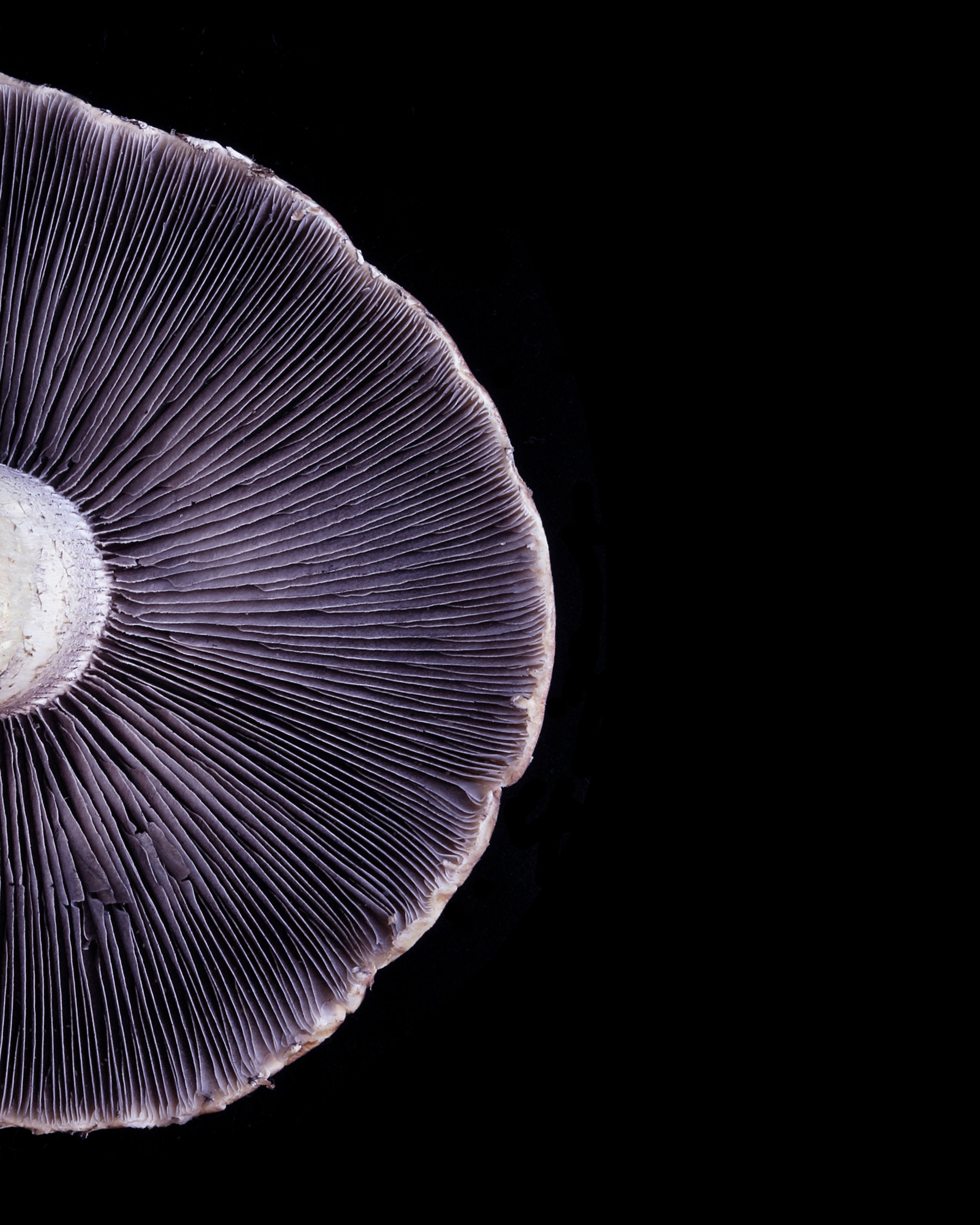
Let’s take a closer look
Did you notice on yesterday’s photo the lovely mauve-colored gills on the underside of the wine cap mushrooms? I wanted to make sure you didn’t miss it. It’s unusual, unexpected, and as a result delightful.
detail of wine cap mushroom gills (Stropharia rugosoannulata)
an excess of enthusiasm
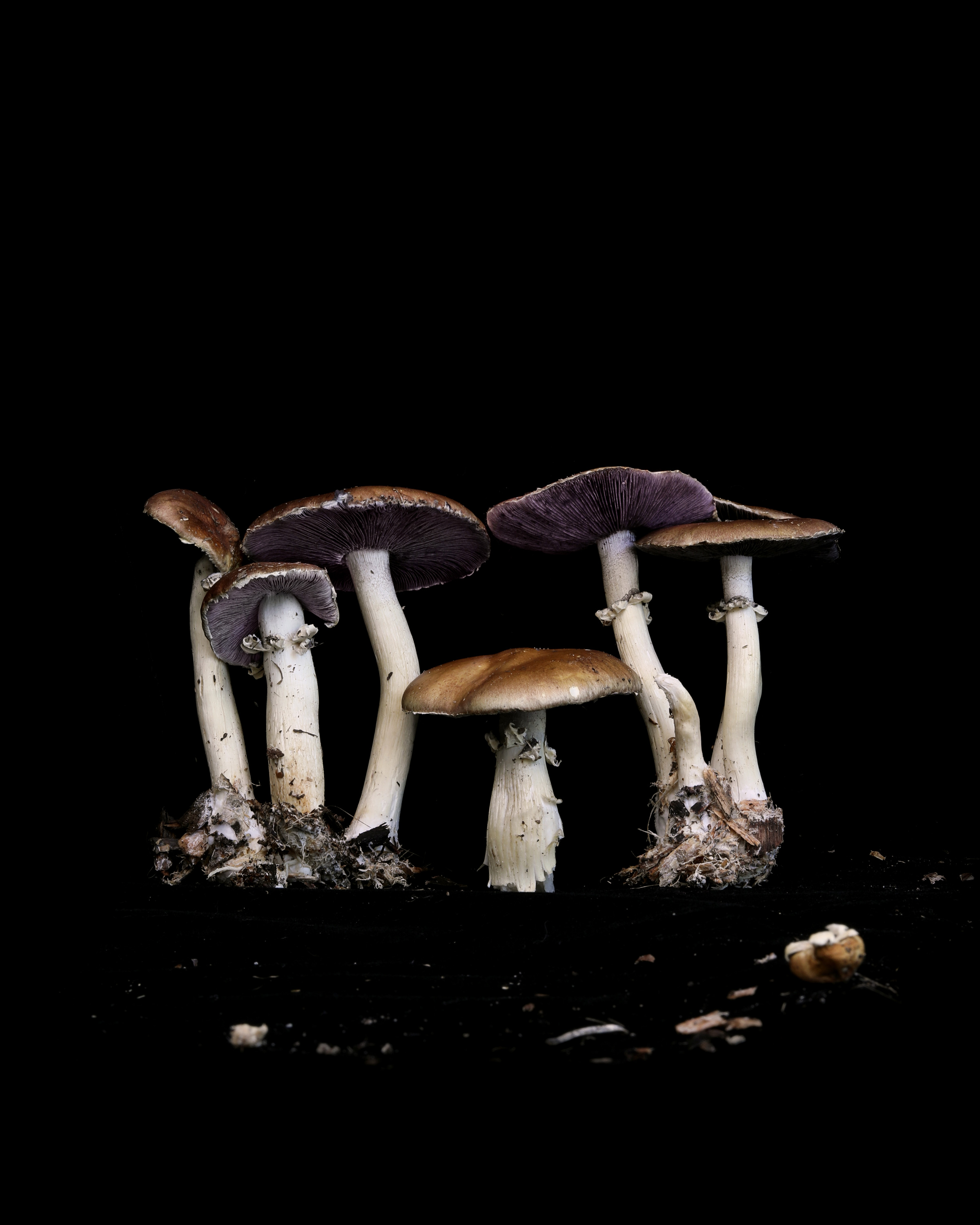
After spending all last year in an apartment while our house got rebuilt after the fire, we clearly had a year’s worth of pent-up enthusiasm for the yard, the woods, and the lake. So come spring, we hit the ground running. As of today, it’s official, we just completed our last major outdoor job for the time being and it was a doozy—dock repair. Among the long, long list of things we have been doing outside is “sporing mushrooms”. My husband and son have been slowly turning our property into an northern edible food forest using native species only. One such species is the Wine Cap mushroom. It is so easy to spore and grow, that I think it might be every budding mycologists gateway mushroom. We have grown them before; taste-wise they are good not great, but they dry beautifully and we like them in mushroom risotto in the winter. If you want to try sporing your own mushrooms, and haver a shady nook with wood chips—get yourself some wine caps! It really is quite fun.
wine cap mushrooms (Stropharia rugosoannulata)
there’s a pattern being established
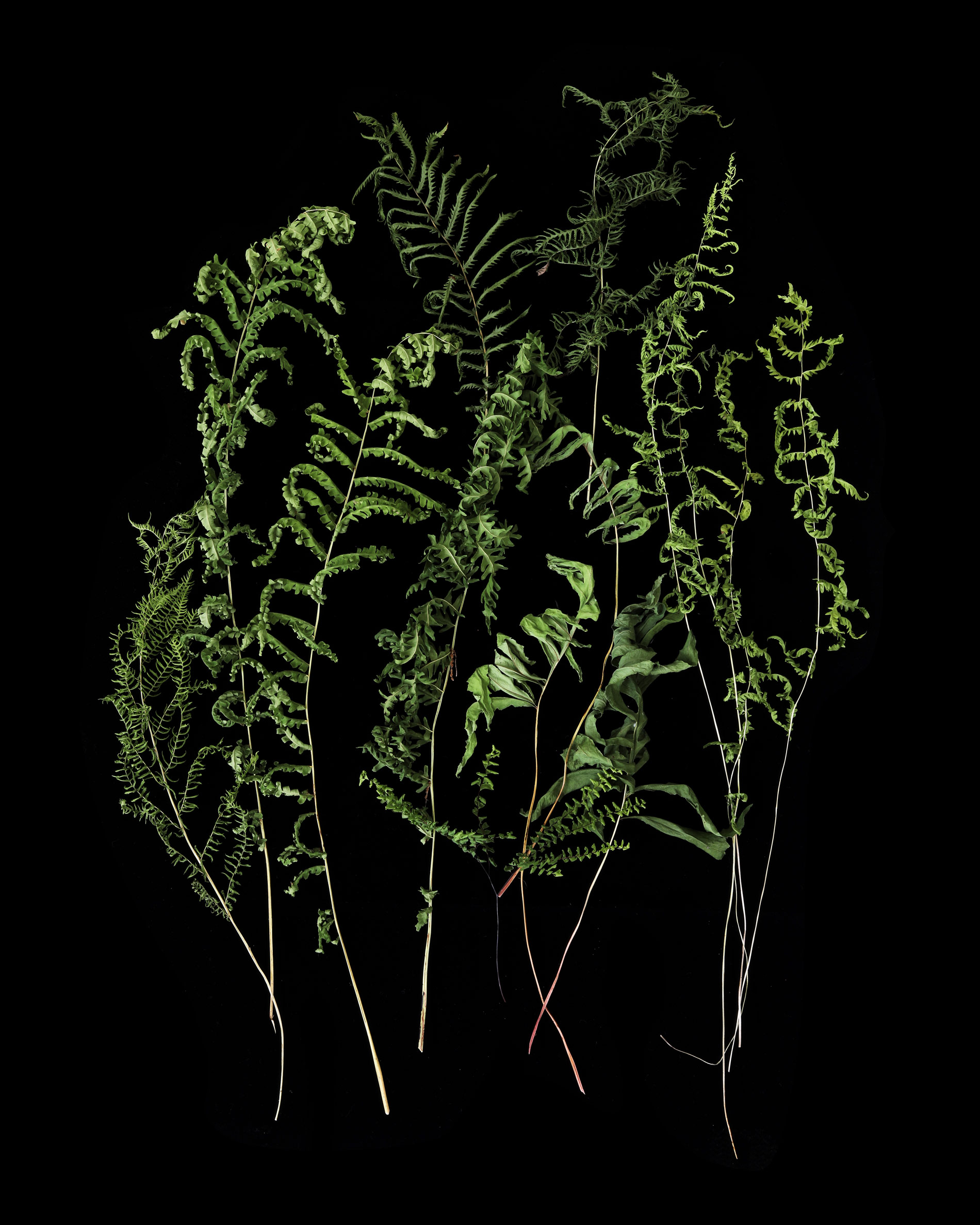
These are the fern frond, now dried, that I posted a week ago. I think I like them dried better. Can you see a pattern being established here? I make an assemblage or composition, and then let it hang around for week or two to see what happens. Often, not always, I find the wilted/dried composition more interesting. I also get two photos for the effort of one–but I can honestly say that’s not why I started this new practice. I am simply finding the imperfect, the wilted, the impermanent more interesting. It could be my own aging, or it could be that the subjects objectively are more interesting in these later stages. You tell me!
Hope you all had a good Holiday weekend!
Collection of dried northern fern fronds
-
I think it’s most interesting to see both forms of whatever. My fave might be prime or fading, depending on the subject matter. With the ferns I prefer fresh over declining.
reply
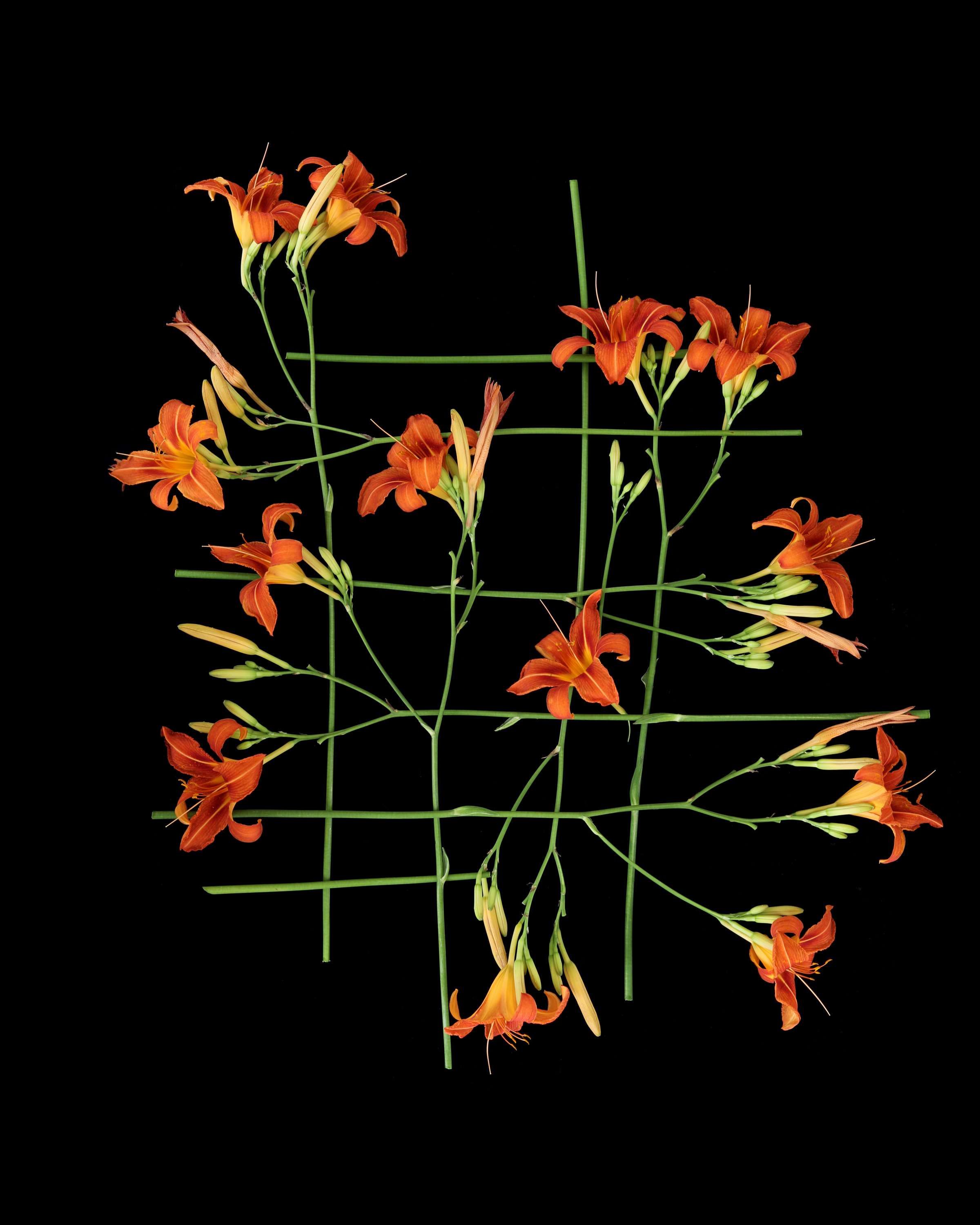
daylilies for days
My neighbor has her boulevard (that little strip of land between the sidewalk and the road) planted dense with daylilies–it’s not a bad way to contain them, now that I think about it. She owns 10 acres, so the lot is wide and the daylilies stretch for half the block. They are in full bloom right now, and it is quite beautiful–all that orange against the green curtain of a midwestern summer.
orange daylilies (Hemerocallis fulva?)
-
I love ditch lilies, they’re just so bright and cheerful! Your neighbor’s display must be splendid. It’s interesting how your artist’s eye told you to add those two horizontal stem pieces at the top and bottom of the composition. Perfect!
reply

I’m not an expert but I can tell you that this flower does not look like the chicory that grows along the roadsides in Ohio. But then I’ve never seen Showy Blue Lettuce.