

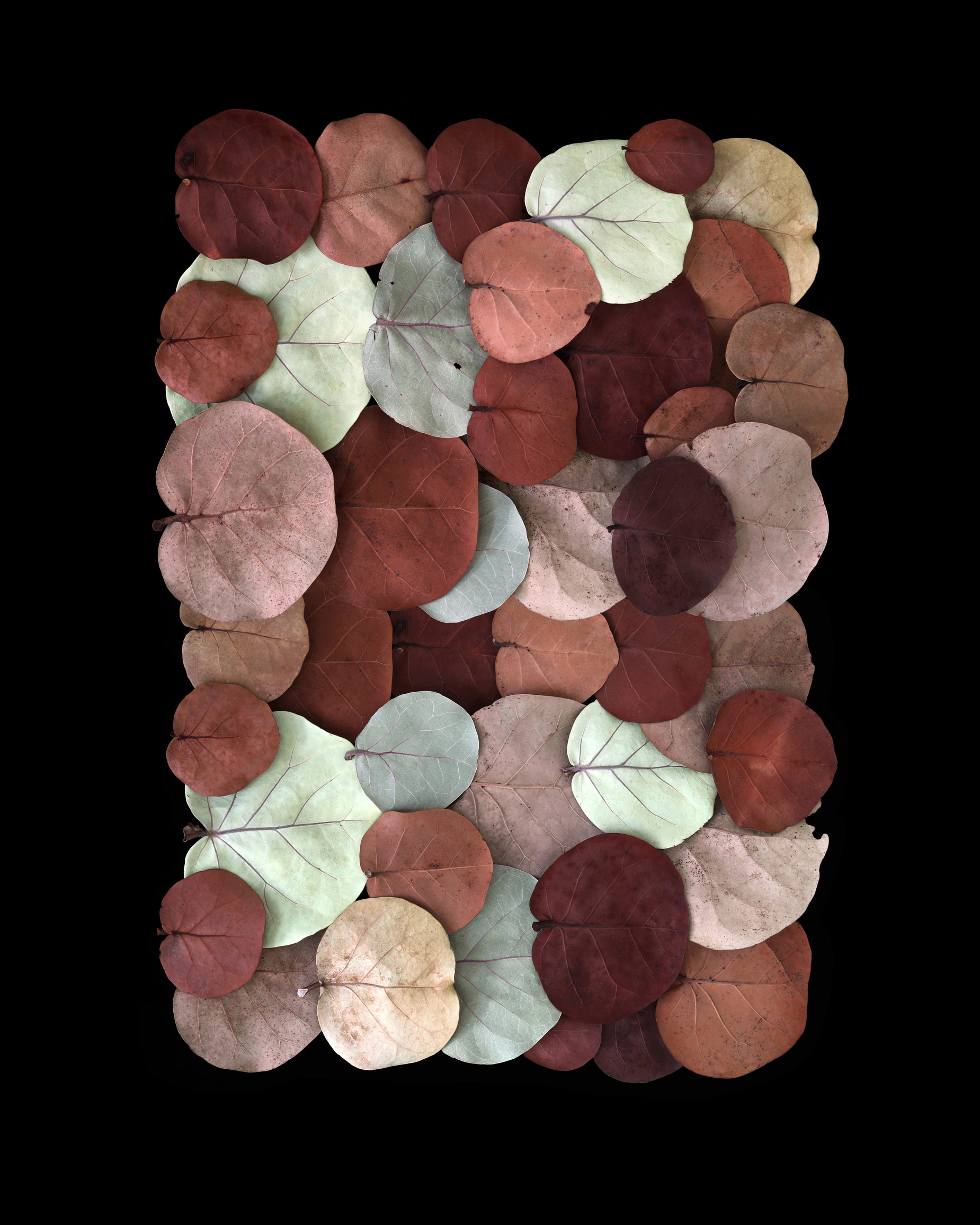
A none Northern color palette
I’m prepping materials a for a conference/workshop I’m teaching at in Longwood, PA in two weeks, so I pulled out a box of dried botanicals I gathered at a previous workshop I did in Bonita Springs, Florida this May. I was thrilled to see all my treasures had successfully survived the transit. Is this an interesting palette? I like it a lot.
Dried Sea grape leaves (Coccoloba uvifera)
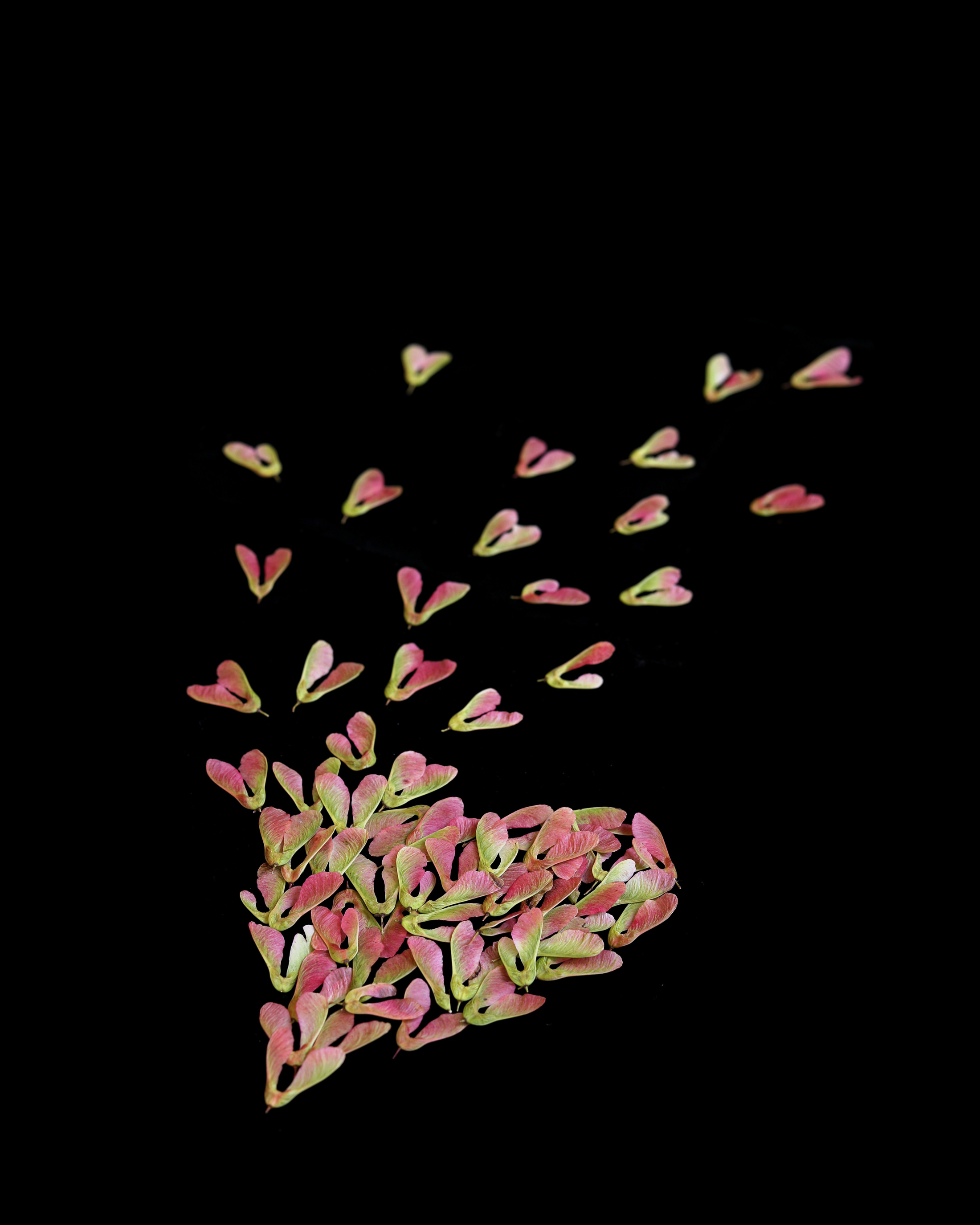
breaking free
It seems odd to be noticing maple samaras now, but I just looked it up and these Amur Maple samaras do indeed mature in late summer. Amur maple is not not native to North America, so maybe that explains the discordancy of maple seeds ripening in August. I love the pink and lime green color combination in these half-mature seeds. They will continue to ripen to a very dark pinky red in the next few weeks. I find myself wondering why all the non-native imports are so much more colorful than our native plants, and then I remind myself that these plants were exported around the globe precisely because they are colorful. It’s not that ALL plants from Eurasia are more color than ours, it’s simply that the ones that have been brought here were specifically chosen for that very reason. Is this what they call a tautological question?
amur maple samaras (Acer tataricum subsp. ginnala)
-
I love all your work, but this one’s particularly nice! Love it!!
reply

new-to-me
You know how much I like surprising you with new subjects :-). Here’s one I am guessing at least some of you haven’t seen before, the flower of a caper bush. As most of you know, Steve has a passion for all things Mediterranean, and has been trying to grow as many mediterranean culinary plants as possible. Right now we are proud owners of VERY large bay laurel tree (that overwinters in our basement under grow lights, a Meyer lemon tree, a fig tree, and a caper bush. We’ve had a hot summer here, so right now all of them are thriving.
Here are few fun facts about capers:
Capparis spinosa is native to almost all the circum-Mediterranean countries, and is included in the flora of most of them, but whether it is indigenous to this region is uncertain. The family could have originated in the tropics and later spread to the Mediterranean basin. The plant is best known for the edible flower buds (capers), used as a seasoning or garnish, and the fruit (caper berries), both of which are usually consumed salted or pickled.
caper flower (Capparis spinosa)
-
What a beautiful surprise!! I’ve never seen this flower before and I am an avid consumer of capers. Were I a caper seller I’d totally put this flower on my label.
And I’d pay good money to watch y’all wrestle all those Mediterranean plants into the basement in the fall. Evil of me, I know. What a chore that must be.reply -
Beautiful and delicious
reply

fair’s fair
It only seems fair that I show you the flowers that bloomed from yesterday’s buds. I smile when I look up the proper name for a plant and its official name includes the word “common”. For the most part, I only photograph subjects I find beautiful. So to find that a beautiful subject is so ubiquitous to earn the moniker “common” makes me happy. More beauty for all.
common sunflowers (Helianthus annuus)
-
They glow from within, don’t they? Sometimes I try to imagine the world without color and think I’d miss yellow the most…
Got the keynote wrapped up?
And what is Joe going to do with QAL seeds? (a loose end I’ve been wondering about).reply
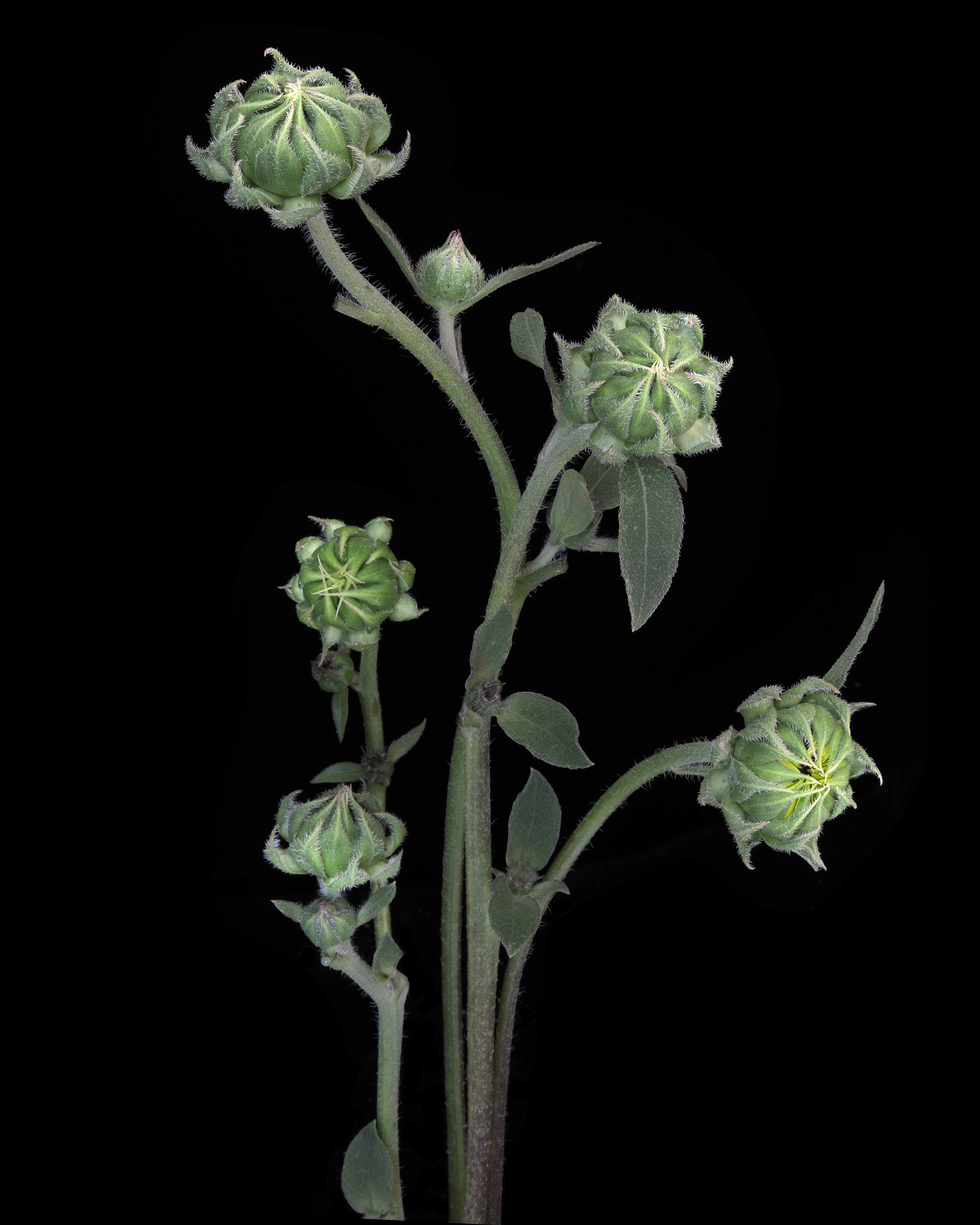
streets of gold
It’s roadside sunflower season! From here on out our roadsides here in the North will keep getting more and more golden as our 18 (!) native goldenrods come online. As the sun starts to get lower in sky, and lights it all up, it will look like our streets are edged in gold.
roadside Common Sunflower buds (Helianthus annuus)

It is a lovely palette! The combo of color, shape, and composition is very soothing somehow. Can’t tell, is this all the backs of the leaves?