


Take a guess?
Anyone know what these are? We have an exciting new restaurant opening in Minneapolis next month, and was asked to make composition using this fruit which will be the name of the new restaurant. I won’t say anything more until I get a few guesses. Good luck! :-)
a staycation in Minneapolis
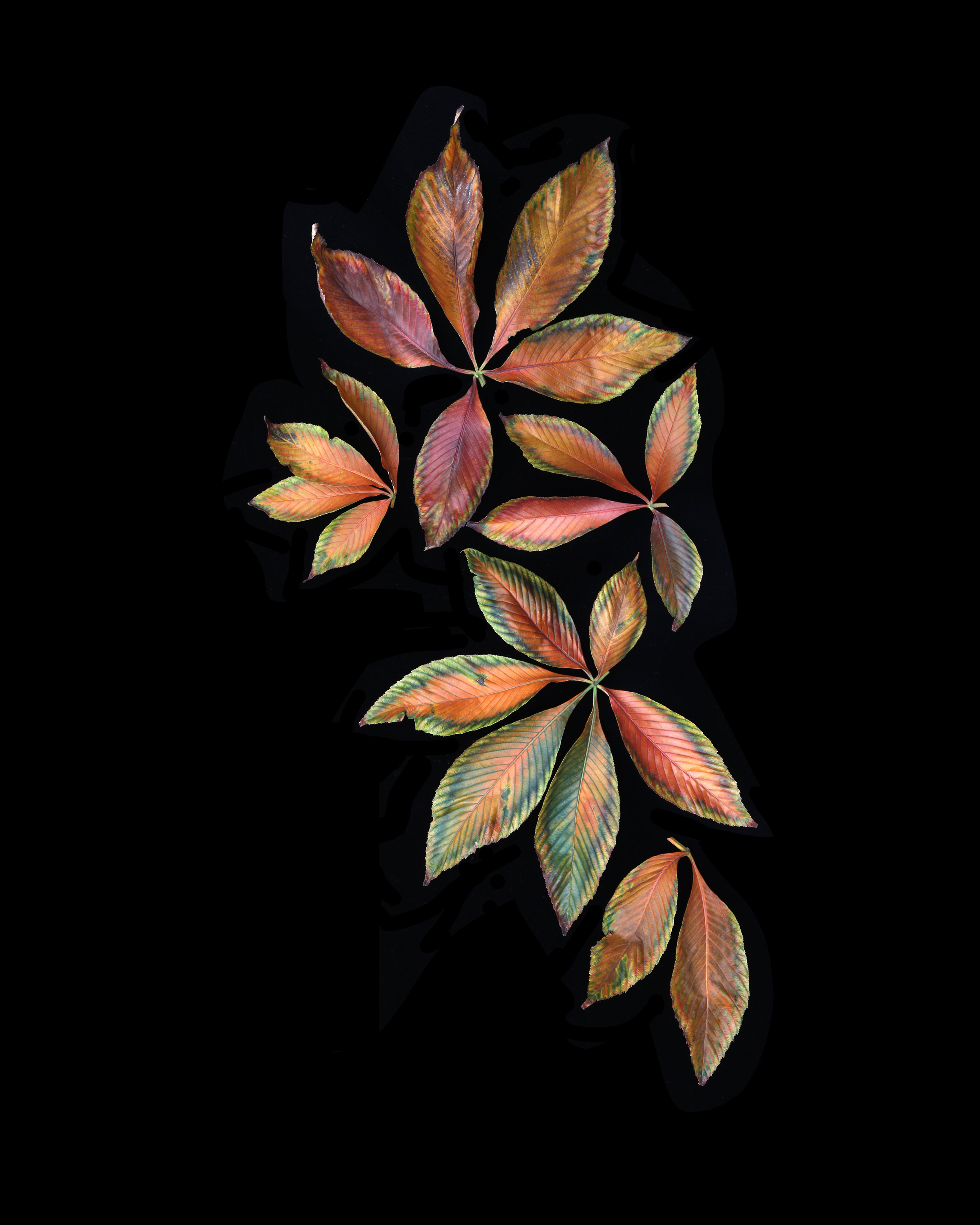
Today I spent the day in Minneapolis with my bestie Kristin, doing the kinds of things you generally only make time for on vacation: we started at the Minneapolis Institute of Art (Mia) to see the Paris Couture exhibit, then we ate lunch outside on the sidewalk at a French bistro called Cafe Barbette, after lunch we stopped at one of my favorite stores––Isles Studio––to buy Steve’s favorite hand-soap for the bathroom, and then we went to a Gallery Opening for a friend of Kristin’s. All the while I was picking up leaves and deadheading flowers and stuffing them in my purse–case in point: these horse chestnut leaves. Such a well-filling day in my own hometown. I am sated.
horse chestnut leaves in autumn (Aesculus hippocastanum)
never before
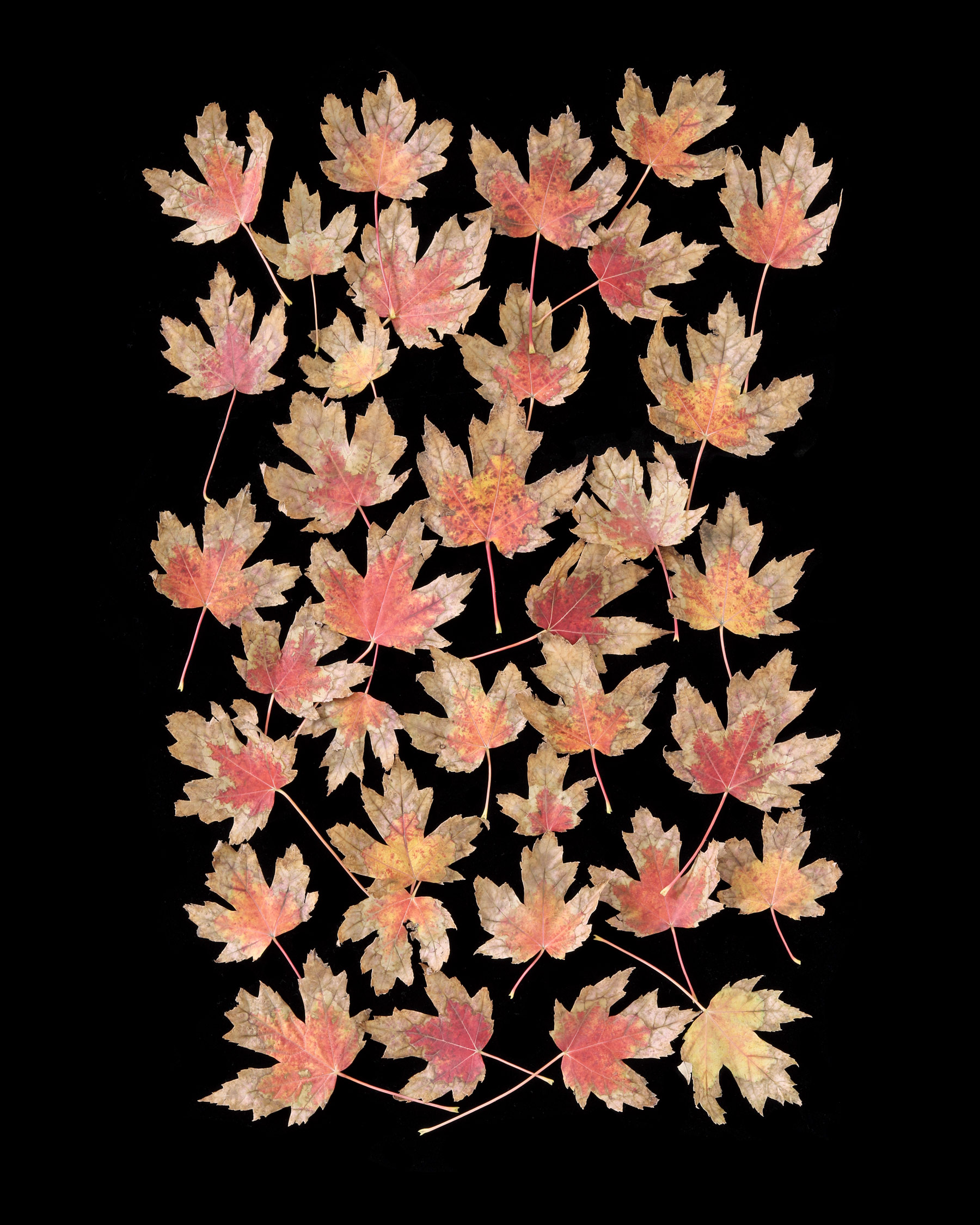
Steve and I collected these leaves outside our favorite Twin Cities fish market, Coastal Seafoods. We are making a seafood chowder for dinner tonight. I’ve never seen maple leaves do this before and had to stop and pick up an armful while Steve loaded the car. My guess is either that our late summer drought dried the delicate perimeter of these leaves while the center, closer to the stem, remained healthy; or that we had a touch of near-frost recently that had a similar effect. In any case, I’m enchanted by these little leaves within leaves. Now off to saute some vegetables.
unusual autumn maple leaves
-
How delightful! I’ve never seen anything like it. Great find, for sure.
reply -
Crabapple (??)
reply
14 years of professional noticing
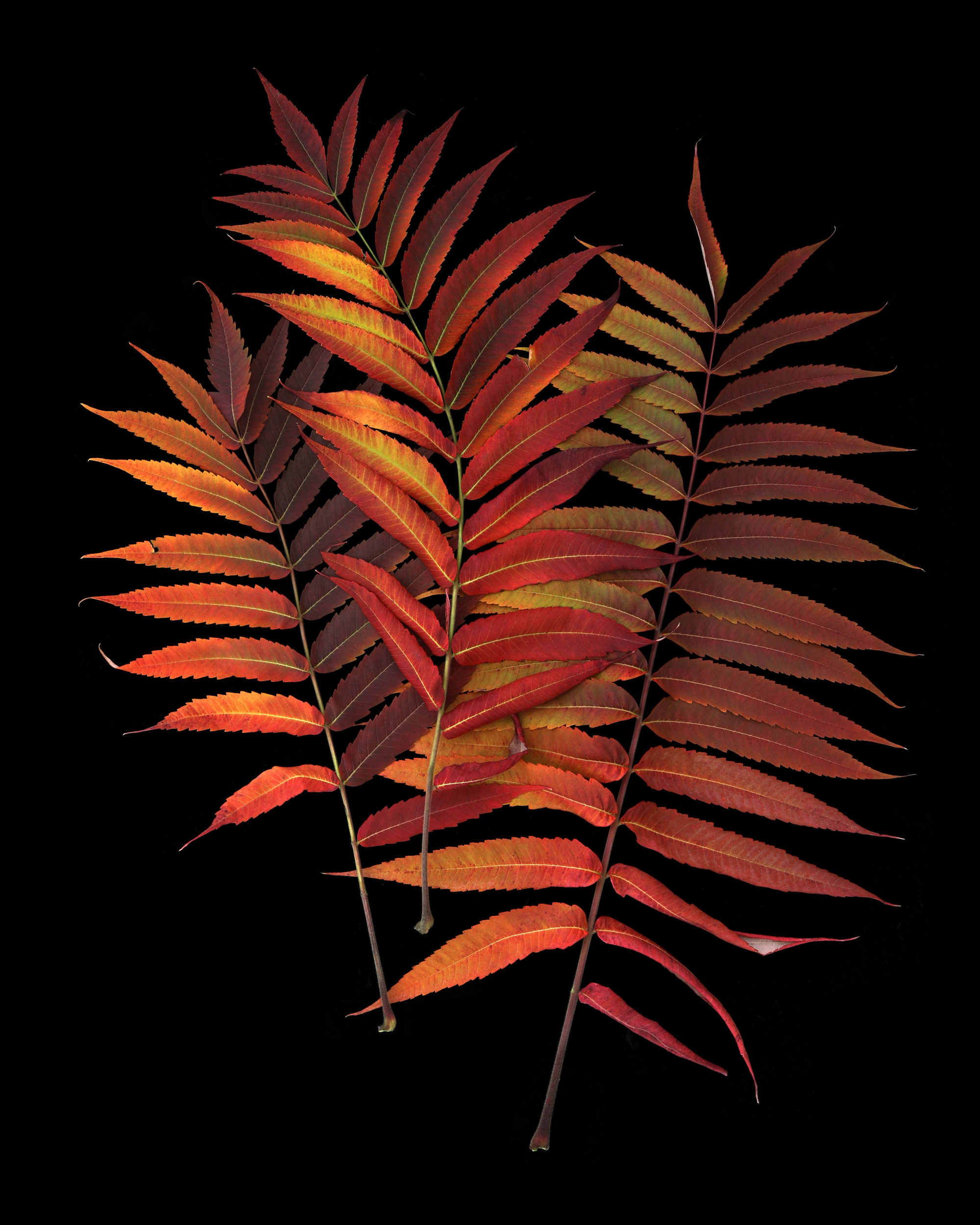
Since I started STILL on January 1st, 2012––14½ years ago––I have never seen our staghorn sumac turn such inviting and varied colors. I wish I knew what the magic formula of rain, temperature, and daylight that produced this stunning display this year. All these earthy secondary and tertiary color combinations in natural–– and yet somehow unexpected––gradients has my head whiplashing from one side of the other to the other on every errand. I have been gathering sumac every day for the past week or so, but I haven’t wanted to gorge you on sumacs. So most of the leaves are drying, and will make their debuts this winter when we all start to get a little tired of brown and gray. (p.s. don’t worry, you will see a few more in the coming days too :-)
staghorn sumac (Rhus typhina)
-
The sumac posts have all been splendid. My fave so far is the circle! Keep ‘um coming :)
reply
can’t unsee it
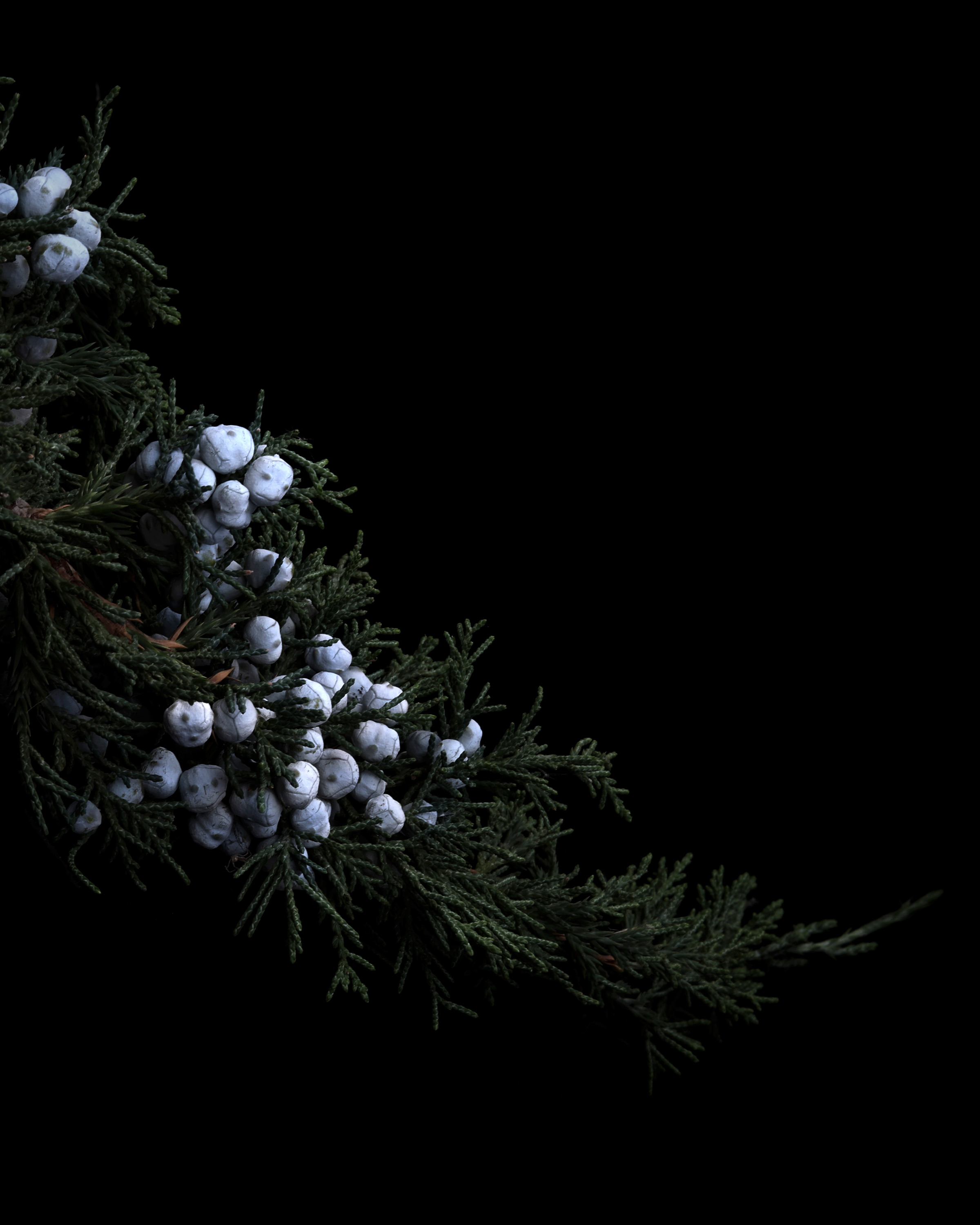
As I edited this photo I discovered that almost every one of these juniper berries has a little alien face on it. Now I can’t unsee it, and neither can you. Sorry, but I like the photo, so you are stuck with alien juniper faces stuck somewhere in your brains. There are worse things . . .
Eastern red cedar, aka eastern juniper (Juniperus virginiana)

It’s too easy to just check google lens. I would have guessed a plum of some sort and been so wrong! I won’t give it away, but great name for a restaurant! Love the composition.
Cranberries- wild guess,
Crabapples ??